Nonviolence in Practice
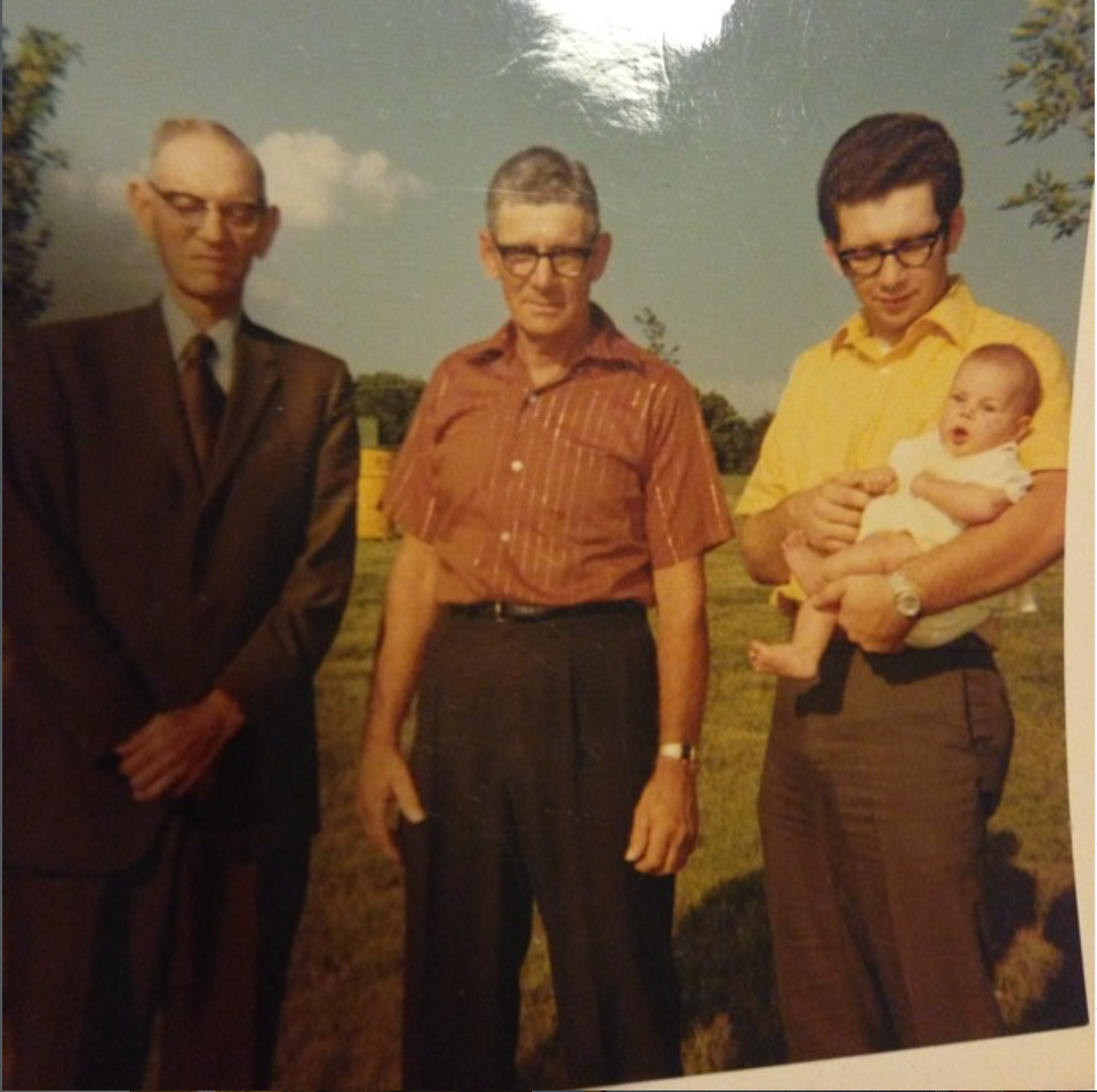
The first four-generation photo of Hartzlers, after my sister’s arrival. From left, J.D. Hartzler, a Mennonite minister; Paul Hartzler, aka grandpa (and third generation farmer); and Roger Hartzler, aka dad. My sister is the oldest in my generation of eight women. J.D. wrote a warm letter to my sister when she was born, welcoming her to the family. He died reading his Bible five months later.
For as long as I can remember, I have experienced visceral reactions to violent language, images, and actions.
My work and my life focus on the practice of using words as bridges, not landmines. That means de-weaponizing ideas as much as it means choosing language.
I attribute my DNA-level resistance to violence to my Mennonite roots. My grandfather and my father served our country in different ways as conscientious objectors during wartime. Some would call it cowardly, and maybe it is, and was, benefiting from other people’s willingness and capacity to take up arms for necessary interventions on our behalf. I also consider it principled, and admire everyone who has accepted and served a greater duty to the collective, in any way. My grandpa helped pave roads in Indiana and did trailwork in Yellowstone National Park as part of the Civilian Conservation Corps, living away from my grandma when my dad was an infant during World War II. That wasn’t easy for their young family, and it offered meaningful value to folks in the U.S., as the war raged on.
From normalizing gunplay for kids, analog and video, to “small” choices in words and metaphors, I have always questioned — why?
Why are we “taking a stab” at an answer, rather than offering an informed thought?
Why are we throwing stones to kill birds, rather than feeding them, with the same hands?
Why are we biting or dodging bullets, “under the gun” or otherwise?
Why do we label folks “word police” when they attempt to bring more discernment to the words we choose? Why is invoking police and law enforcement itself complex?
I want a world with more peace, for more of us. I see decisions made every day, large and small, that inflict suffering on innocent people — people, like me, who are just seeking a life of family, health, connection, and community. I don’t have many answers, and I find that I get smarter when I pause to ask more questions.